
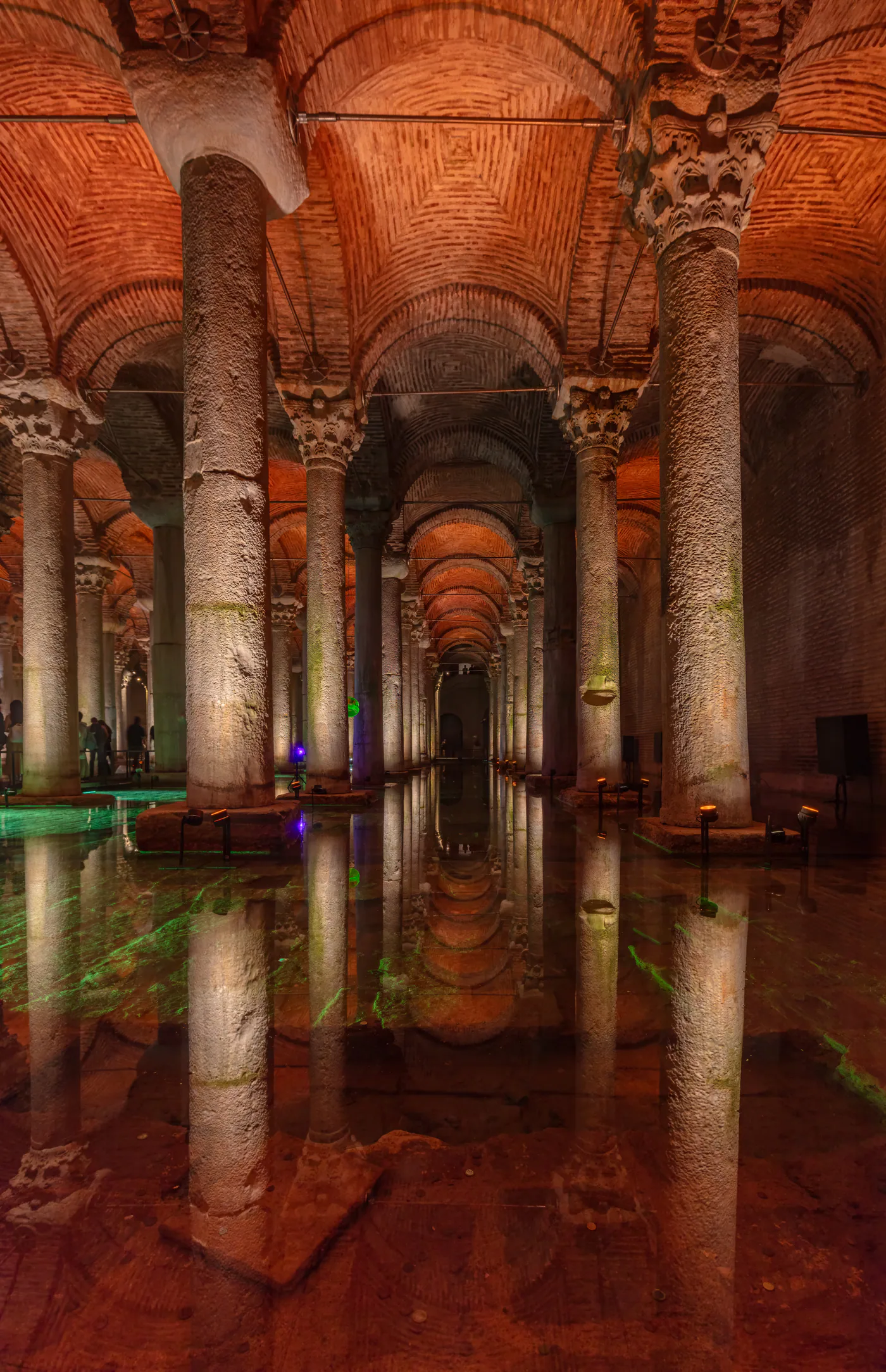
The Basilica Cistern is a good reminder that Istanbul’s history is not all above eye level. Beneath the streets near Hagia Sophia, rows of columns turn a former water reservoir into one of the city’s most distinctive spaces. Come for the architecture and atmosphere, not for a long sequence of conventional museum exhibits.
Make sure it is the right cistern
Save the Turkish name, Yerebatan Sarnıcı, on your map. Istanbul has several visitable cisterns. Şerefiye and Binbirdirek are different places, and photographs or tickets labelled simply “Istanbul cistern” may not be for the one you intended to see.
Yerebatan sits in Sultanahmet, close to Hagia Sophia. You do not need a taxi between the major sights around the square. If you are coming from another district, use the tram and finish the journey on foot, allowing time to find the entrance rather than heading directly to the building’s centre on a map.
What makes it worth visiting
The reservoir was built in the sixth century under Justinian. Its reused stone columns and two carved Medusa heads make it much more than an empty underground chamber. GoTürkiye’s historical introduction gives the broad background without requiring a long reading session before you arrive.
Follow the permitted walkway and pause where you can see several rows of columns at once. The changing angles, water reflections and dark spaces between the supports are part of the experience. Rushing straight to the Medusa heads and back misses much of what makes the place memorable.
The heads are among the best-known details. Look at the carving and the way each block has been incorporated into the structure. Stories about their placement are often repeated with more certainty than the evidence warrants. Enjoy the mythology, but distinguish a story from a demonstrated explanation of the builders’ choices.
Allow time for the atmosphere
We suggest about 45 to 60 minutes inside, plus any entry queue. It is a planning allowance rather than an official duration. Someone taking photographs may linger longer; a child who dislikes dim spaces may be happier with a shorter circuit.
Put the phone away for the first few minutes and let your eyes adjust. When you do take pictures, stay out of the flow on narrow sections and follow the photography instructions. A bright flash will not recreate the mood of the space. Avoid bringing a tripod unless you have established that it is permitted.
The combination of stairs, low light and a route beside water deserves a little attention. Use the handrails, keep children close and wear shoes with a reliable grip. If you need step-free access, contact the venue about the currently available entrance and route before buying a ticket; historic photos cannot confirm present lift or access arrangements.
Tickets and a sensible backup plan
Before paying, check the day’s ticket information at the entrance and make sure your ticket clearly names Yerebatan Sarnıcı. If you want an evening visit, establish which session is being sold and when you need to arrive. Your hotel can help contact the venue if you would rather settle those details before walking over.
Keep the rest of the day flexible. The cistern pairs naturally with Hagia Sophia, then an outdoor break around the square. If the queue is longer than you want, the Turkish and Islamic Arts Museum is a different nearby indoor option. The point is to enjoy the neighbourhood, not spend the entire afternoon committed to one line.
Addresses & maps
Put it on your map
Yerebatan Sarnıcı
Alemdar Mahallesi, Yerebatan CaddesiFatih, Istanbul
The Basilica Cistern near Hagia Sophia. Şerefiye and Binbirdirek are different cisterns with different entrances.