
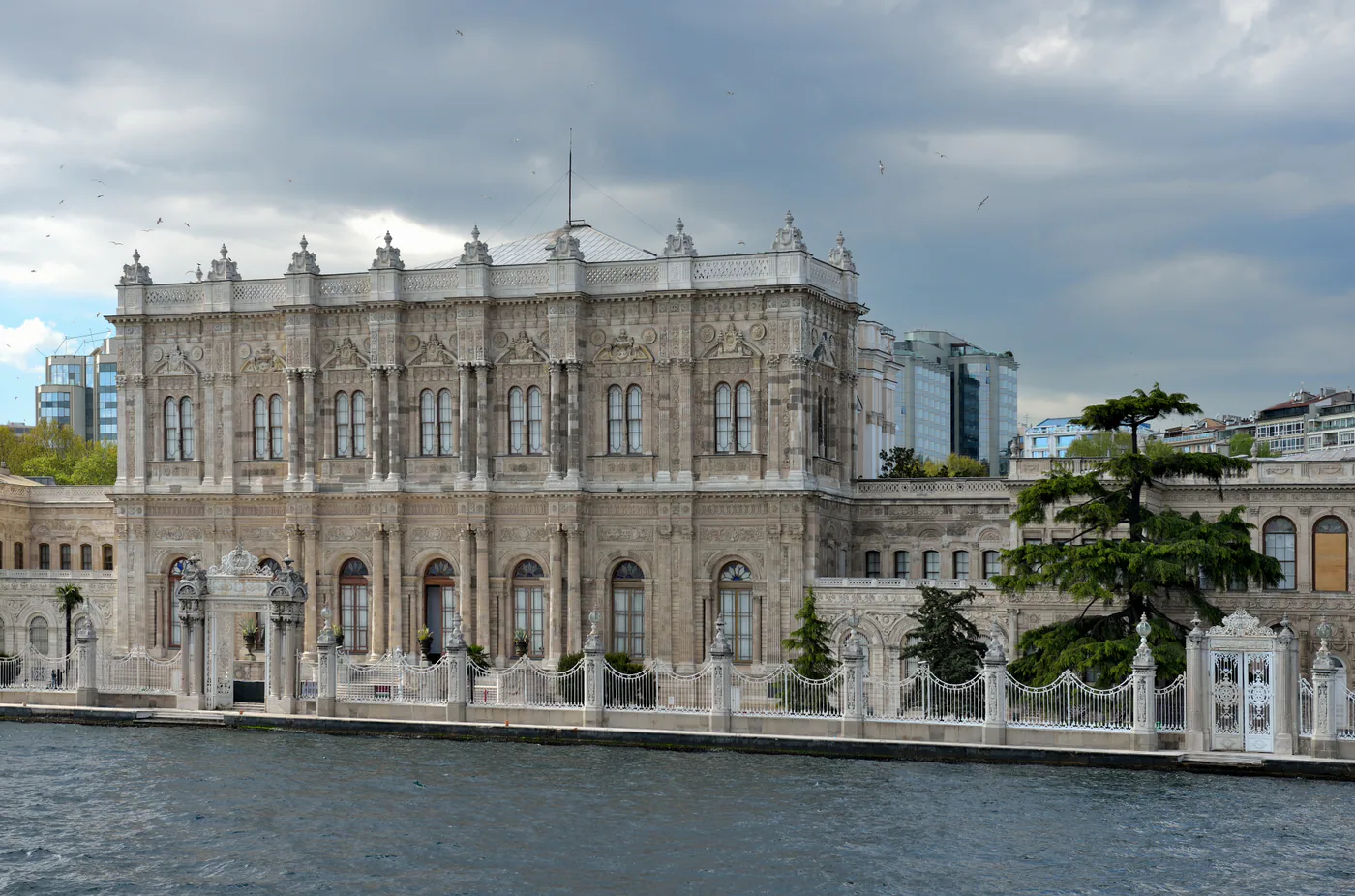
Dolmabahçe gives you a different Istanbul palace day from Topkapı. Here the setting is the Bosphorus shore, the rooms belong to a later chapter of Ottoman court life and the decoration is a major part of the visit. Come when you have time to enjoy those interiors, not just to collect a photograph at the waterside gate.
Is this the palace for you?
Choose Dolmabahçe if you are drawn to ceremonial halls, furnishings and nineteenth-century design. National Palaces describes a building that combines Ottoman planning with European decorative influences. The contrast with Topkapı, with its courts and pavilions, is considerable.
For a first short trip, there is no obligation to see both. Dolmabahçe fits particularly well with a day on the European Bosphorus shore. Topkapı fits a historic-peninsula itinerary. Choose the one that interests you more, and use the journey you save for lunch, a ferry ride or another neighbourhood.
Tickets and the Monday closure
Dolmabahçe is closed on Mondays. Check the palace’s current visitor page for holiday exceptions and ticket options before travelling. Ticket-office closing time is not a recommendation for when to begin a full visit.
Look for the exact sections included in your ticket. The Selamlık, Harem and Painting Museum may appear together in a combined product; other passes have their own conditions. Do not assume a museum card or a general city sightseeing pass includes every room you want to see. If a discounted ticket needs a particular form of identification, bring it with you.
Avoid scheduling another paid entry immediately afterward. Entry checks, the visitor route and time in the grounds can all take longer than a quick map search suggests. A little flexibility means you can finish the palace properly instead of watching the clock halfway through.
Notice the rooms, not just their size
Inside, look at how rooms were arranged for different kinds of life: official business, ceremony and the household. Pay attention to the doors between spaces and the change of scale, then to the carpets, lights and decorative surfaces. That makes the visit more interesting than measuring every room against the biggest hall.
The palace also has a place in the history of the Turkish Republic. Mustafa Kemal Atatürk stayed and worked here, and died in the palace in 1938. The operator’s historical account explains that later chapter alongside the Ottoman story. Keep both in mind as you follow the public route.
Give it a comfortable half-day
Allow roughly two to three hours for the main visit as an itinerary estimate, and more if your ticket includes collections you want to explore closely. There may be standing, stairs and controlled movement through interiors. If these are difficult, ask about the actual route and accessible areas before purchase.
Travel with a small bag and follow the photography signs in each area. Gardens and interiors can have different rules. Keep your phone away when asked; the point of coming inside is to see the rooms, and you do not need a photograph of every one.
Getting there and carrying on
Kabataş is a useful transport landmark south of the palace. From there, continue along the coast to the visitor entrance rather than searching for a route through the palace grounds. From the old city, plan the tram journey using Metro Istanbul and leave time for the final walk.
Afterward, head toward Beşiktaş for food and an ordinary city-street change of scene. If you would like a ferry, choose an actual scheduled service from the Bosphorus guide; not every boat at the waterfront follows the same route. An unhurried palace morning and a simple water crossing make a much more coherent day than zigzagging between distant attractions.
Addresses & maps
Put it on your map
Dolmabahçe Sarayı
Vişnezade Mahallesi, Dolmabahçe CaddesiBeşiktaş, Istanbul
Approach the signed palace entrance on Dolmabahçe Caddesi. The palace is closed on Mondays.